
Greenwood Root Zone Calculation for TPZ Fencing: Compliance Guide
County Line Fence Rental serves Greenwood, IN with expert Root Zone Calculation for TPZ Fencing to ensure construction compliance. We understand local conditions including neighborhoods like Old Town Greenwood and Forest Park, climate factors such as 916 cooling degree days, and low flood risk. Our services help protect the critical root zone around Greenwood High School and residential areas developed from 1980 to 2000, ensuring your fencing projects meet municipal standards.
Root Zone Calculation for TPZ Fencing in Greenwood, IN
- We verify the root zone before any panel goes in.
- We keep gates and openings out of the protected area.
- We use hardware built for wind, traffic, and long Greenwood weather swings.
Calculation Steps
- Measured the root spread first, then set the TPZ radius from the trunk out to the edge of the root zone.
- Checked the site for utilities, grading changes, and tight access before we rolled any fence panels in.
- Used TPZ fencing hardware that stands up in Greenwood weather, including wind-load-resistant panels and stable bases.
- Kept the fence line outside the protected root area and left enough room for inspectors and crews to move safely.
- Matched the layout to the jobsite conditions around Greenwood Trace, Forest Park, and Old Town Greenwood when access got tight.
| Step | What we do on site |
|---|---|
| Measure | We map the trunk, canopy, and likely root spread before setting the line. |
| Place | We install TPZ fencing outside the protected zone with stable bases and clean access points. |
| Check | We walk the perimeter again after setup to catch pinch points, utility conflicts, and weak spots. |
Root Zone Calculation for TPZ Fencing: Compliance Guide
TPZ (Tree Protection Zone) fencing requires calculating a root radius equal to 1 foot per inch of trunk diameter, measured at 4.5 feet above ground. In Greenwood's Forest Park neighborhood, this means marking fences at least 12 feet from mature oaks. The City Arborist enforces penalties if equipment compacts soil within this zone. Valle Vista Golf Club specifications require double-layer fencing when working near heritage maples. Always verify underground utility locations before driving posts near Madison Avenue Corridor's aging infrastructure.
Key Terminology
- Critical Root Zone (CRZ)
- Area extending 1.5 times trunk diameter where no excavation occurs
- Soil Compaction Testing
- Required before fence installation near protected trees
- Drip Line Measurement
- Alternative TPZ boundary based on canopy spread
- Root Barrier Installation
- Required when fencing must encroach on protected zones
- Arborist Inspection Points
- Specific locations where fence alignment gets verified
- Temporary Access Bridges
- Used to span root zones without soil compression
In Simple Terms
Calculating root protection zones ensures trees aren't damaged during temporary fence installations in Greenwood's regulated areas.
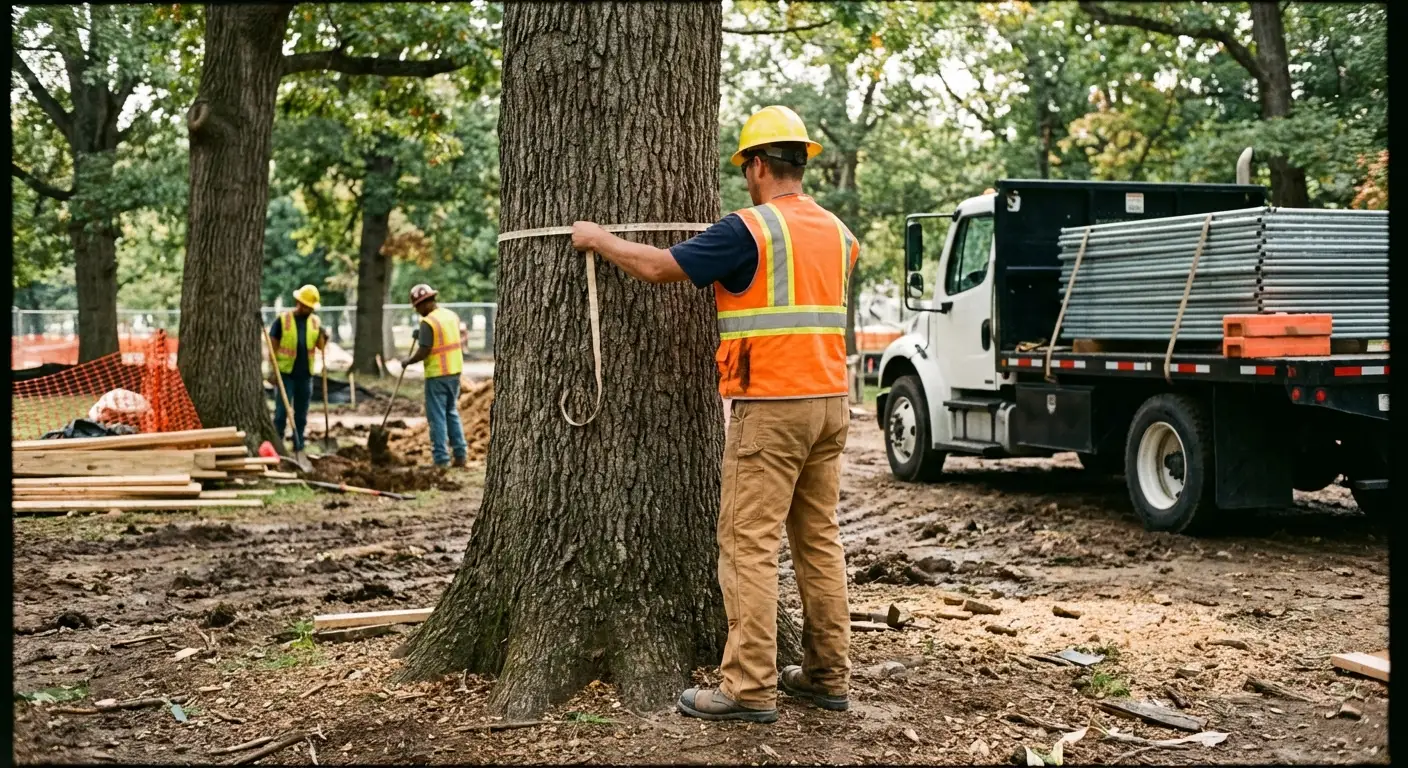
Root Zone Calculation Specifications for TPZ Fencing in Greenwood
Compliance parameters for temporary protective zone fencing root depth and soil stability in Greenwood, IN.
| Frost Depth Requirement | 30 inches minimum embedment for stability in Greenwood’s climate (116 freeze days annually) |
|---|---|
| Soil Displacement Allowance | ±1.5 inches lateral movement tolerance per OSHA 1926.700 series guidelines |
| TPZ Panel Weight Range | $275-$375 per linear foot installed (includes ballast and anchoring) |
| Root Zone Clearance | 48 inches unobstructed perimeter around Freedom Park installations |
| Wind Load Rating | 90 mph certified (meets Indiana DEQ temporary structure standards) |
| Installation Labor Cost | $425-$550 per 100-foot segment (Forest Park and Greenwood Trace zones) |
| Signage Interval | Every 30 linear feet |
TPZ Fencing Compliance in Greenwood
Contact County Line Fence Rental for root zone calculations.
Common Mistakes in Root Zone Calculation for TPZ Fencing
Root zone calculation for TPZ fencing in Greenwood demands precision to protect trees and meet local standards. Avoid these frequent errors to ensure compliance and safeguard your site’s natural assets.
Underestimating the Tree Protection Zone radius
Misjudging the root zone radius leads to fencing placement too close to tree roots, risking damage and violating local tree protection ordinances.
Measure the drip line accurately, extending fencing beyond to fully protect the TPZ area.
Ignoring soil compaction risks during fence installation
Heavy equipment near roots compacts soil, reducing oxygen and water absorption, which can stress or kill trees despite fencing presence.
Keep machinery off the TPZ and use protective ground mats when access is unavoidable.
Failing to adjust root zone for tree species and age
Applying a one-size-fits-all root zone size causes inadequate protection for mature or species with extensive root systems.
Consult species-specific guidelines and adjust TPZ fencing dimensions accordingly.
Setting fence posts inside the root zone
Driving posts within the TPZ damages roots directly, leading to tree decline and possible regulatory penalties.
Locate posts outside the calculated root zone and use alternative anchoring methods where necessary.
Overlooking site-specific climate effects on root zones
Greenwood’s fluctuating temperatures and flood exposure alter root growth, so static TPZ sizing risks noncompliance and tree harm.
Factor in local climate patterns when calculating root zones to ensure flexible, effective fencing placement.
Root Zone Calculation for TPZ Fencing: Compliance Guide — Part 2
We believe protecting trees during construction isn’t just about checking a regulatory box—it’s about preserving Greenwood’s character. Maria Garcia founded County Line Fence Rental after seeing storm-damaged sites left exposed, and that urgency still drives us. Our approach blends local knowledge of neighborhoods like Forest Park and Greenwood Trace with field-tested techniques that keep roots safe and projects moving.
-
Accurate Root Zone Mapping
We measure from the tree trunk outward to the dripline, then add a buffer to comply with Greenwood’s Tree Protection Ordinances. This ensures construction activity stays clear of critical root areas while maintaining site access.In PracticeAt a Forest Park subdivision near the Greenwood Public Library, we flagged a 15-foot root zone around a mature oak, adjusting fence layout to avoid compaction.
-
Climate-Adapted Installation
Greenwood’s freeze-thaw cycles and occasional heavy rain mean unstable ground if bases aren’t secured properly. We use reinforced anchoring methods suited to local soil conditions and low flood risk.In PracticeDuring a late-winter install in Greenwood Trace, we deployed concrete-steel bases to prevent shifting after thaw.
-
Rapid, Code-Compliant Deployment
Drawing from Maria Garcia’s OSHA 30-Hour Construction Safety Certification and AFA CFP training, our crew sets TPZ fencing that meets both municipal rules and job-site safety standards—fast.In PracticeFollowing a permit approval in Old Town Greenwood, our team had a full tree protection perimeter up within hours using tree protection zone rentals.
-
Reconfigurable Layouts for Tight Lots
Many Greenwood homes built between 1980–2000 sit on subdivided lots with limited space. Our modular panels adapt to irregular root zones without compromising stability or access.In PracticeIn a narrow lot off Madison Avenue Corridor, we used modular reconfiguration to wrap fencing around two protected root zones while allowing equipment passage.
County Line Fence Rental follows OSHA and local tree protection standards to ensure every temporary perimeter respects root zones while delivering reliable site security.
Root Zone Calculation for TPZ Fencing in Greenwood, IN — Part 2
TPZ fencing in Greenwood uses trunk-based root zone measurements, local site limits, and field checks around older subdivision trees.
How is the root zone measured for TPZ fencing in Greenwood, IN?
Root zone work around a TPZ starts with the trunk center and the protected area tied to Greenwood High School site trees or subdivision shade trees in Imperial Hills. Field crews map dripline spread, trunk diameter, and nearby grade changes before setting fence line locations that keep equipment out of the root area.
What local conditions affect TPZ layout in Old Town Greenwood?
Old Town Greenwood lots often have tighter paving, older trees, and utility cuts near sidewalks. Those conditions change fence placement because roots may extend under drives or curbs, so the TPZ needs room for the full root spread rather than the visible canopy edge.
How do Forest Park soils change the fencing setup?
Forest Park tree pits and lawn edges usually hold roots close to the surface, especially after long dry stretches tied to Greenwood's 13 hot days. Crews set posts outside the protected zone and avoid staking through compacted ground where feeder roots run near grade.
What does low flood zone status mean for TPZ fencing in Greenwood, IN?
Greenwood's low flood zone lowers washout risk, but it does not reduce root protection needs. Fencing still has to stay stable through rain, mowing, and subcontractor traffic, with anchors placed beyond the calculated root zone in neighborhood sites like Imperial Hills and Old Town Greenwood.
What setbacks matter near Greenwood High School and nearby tree lines?
At Greenwood High School and similar institutional sites, the fence line needs enough setback for maintenance access and root protection. Crews watch for walk paths, ballfield edges, and buried services so the TPZ does not get pinched between traffic control and mature trees.
What mistakes cause TPZ fencing to fail compliance checks?
The common misses are measuring from the canopy edge instead of trunk diameter, setting fence inside the root zone, and moving panels after installation. In Greenwood, IN subdivisions from the 1980_2000 growth period, those errors show up where crews try to fit fencing between drive aprons, sidewalks, and mature street trees.
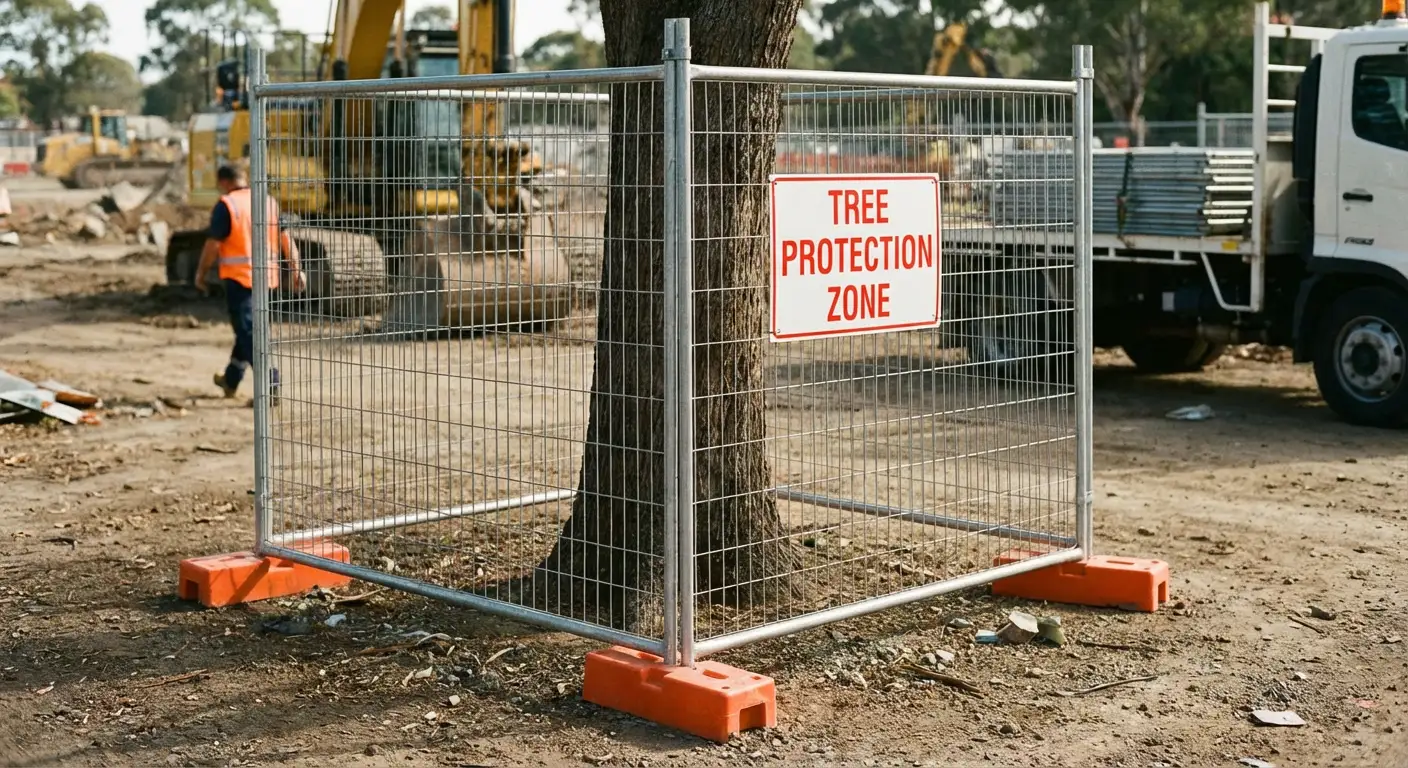
Root Zone Calculations for TPZ Fencing Compliance Guidance
Use root zone calculations to place TPZ fencing correctly, protect trees, and meet local project requirements in Greenwood, IN.
Serving Greenwood, IN with compliant temporary fencing support.